
This is our flagship music server in the latest range of our Extreme music servers. Like in automobile branding, the “RS” stands for ‘Racing Specs’ indicating enhanced performance capabilities, and in our case, enhanced computing capability and reliability (industrial motherboard). It has enough processing power to run software like Roon. The short name is AARS abbreviated from AAMS XT RS.
“ROON” is a registered trademark owned by Roon Labs LLC.
New LPSU
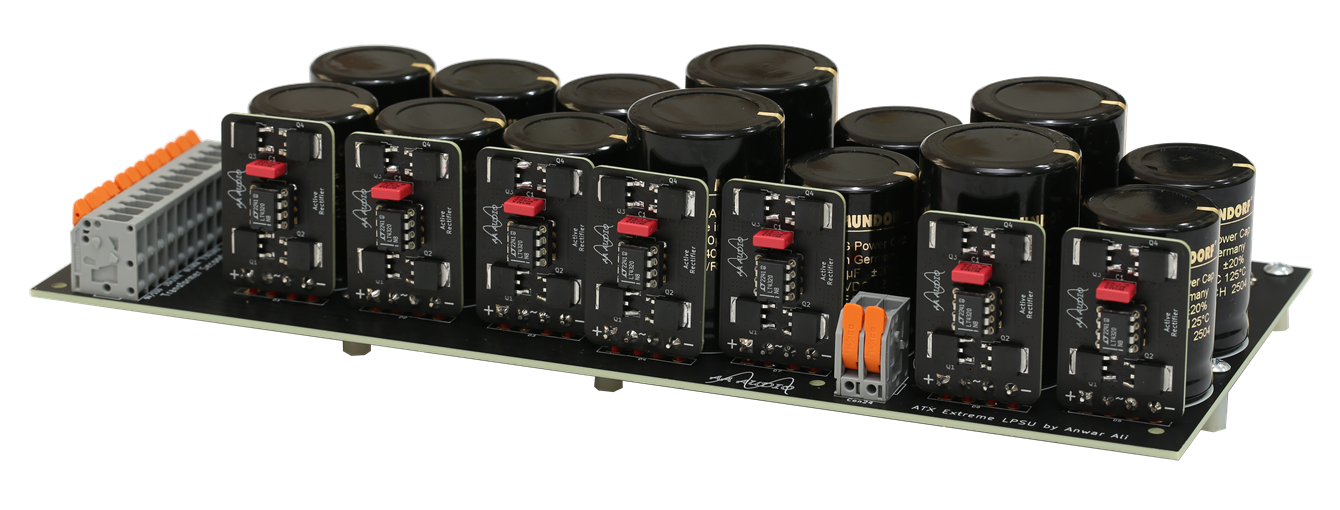
Unlike the previous AAMS which uses diode bridge rectifiers, AARS uses active rectifiers with Mundorf MLytic AG (Audio Grade) smoothing capacitors. We use Linear Technology LDO voltage regulators for the second or final stage regulation. When the music server is shutdown (front button pressed twice), after the power LED is off, the Linear Technology voltage regulators go into shutdown mode, making the power supply standby current very low. This is important especially for SSD rail since if the SSDs remain powered after the computer goes into standby, the current consumption is higher compared to when the computer is running.


KEMET tantalum capacitors are used as the output capacitor for each voltage regulator. These are expensive but very long lasting. The Nichicon Fine Gold caps are used with the TI’s voltage regulators (first stage) for ripple reduction.

The total capacitance is 264,000 µF for 6-rail LPSU and 308,000 µF for 7-rail LPSU, all using Mundorf MLytic AG capacitors. Capacitors with 40V DC rating are used for 12V rails while capacitors with 25V DC rating are used for 5V and 3.3V rails. We prefer using 40V DC caps for all rails but the larger diameter and extra height make it impossible to fit all parts into Streacom FC10, hence the use of 25V DC caps for the lower voltage rails. Each rail has its own active rectifier.
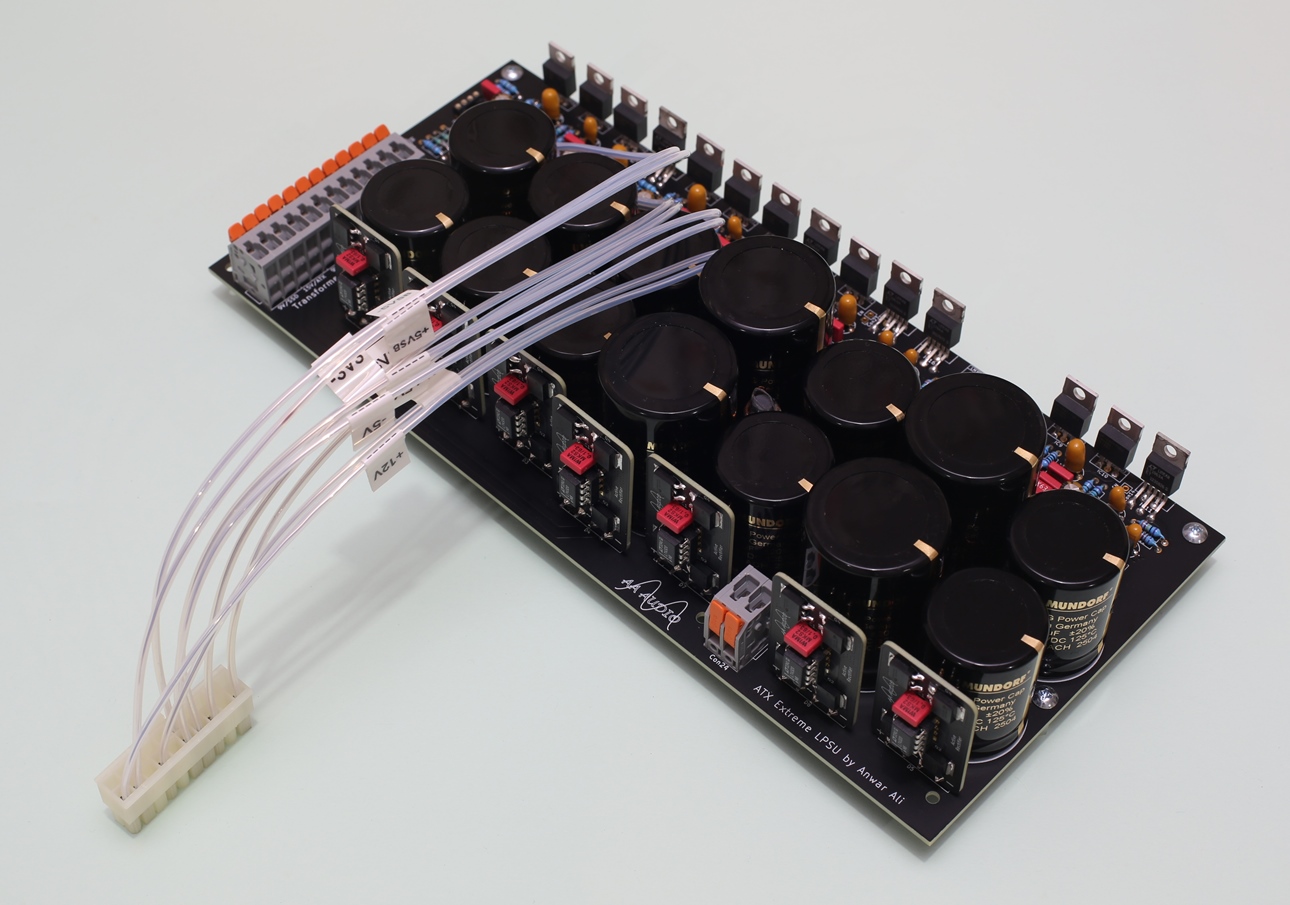
The 20-pin ATX connector which goes into motherboard uses Mundorf Silver Gold unsheathed solid wires placed inside slightly oversized Alpha Wire thin-wall PTFE tubes. The solid wires are directly soldered to the ATX Extreme LPSU board. We also offer Neotech SOCT UP-OCC solid copper wires option but we highly recommend the Mundorf SGW.
Dual Toroidy Transformers
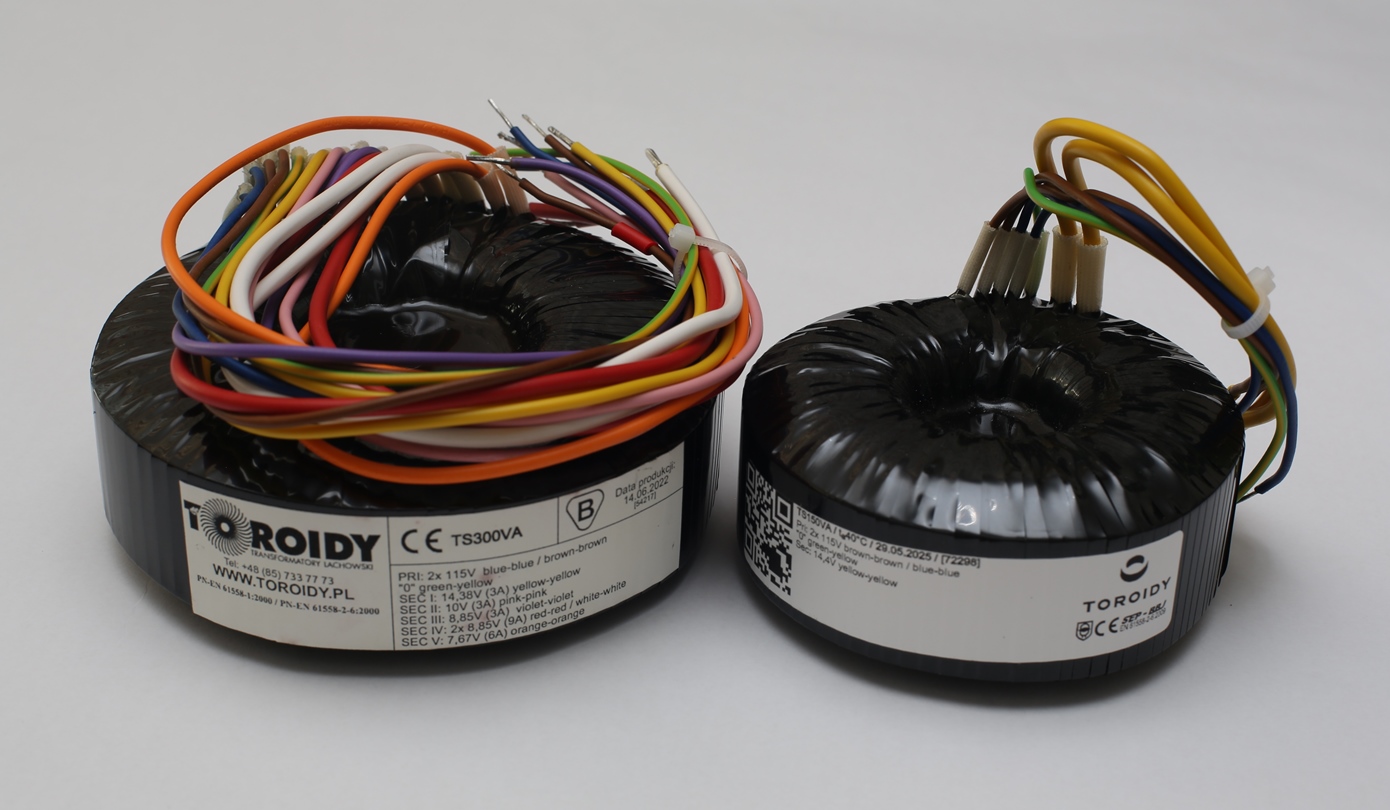
We use 2 transformers:
- custom 300 VA; four rails for motherboard ATX (5V SB, 12V, 5V, 3.3V), one rail for up to 3 SATA 2.5″ SSDs, and one rail for USB2 Isolator
- 150 VA single rail for 12V EPS to power the CPU
These are audio-grade toroidal transformers made in Poland with the following specifications as specified in Toroidy website:
- covered on the outside with black Mylar tape which gives it an aesthetic appearance
- additional magnetic screening and the electric monitor of coated SYN-SHIELD copper tape between windings
- epoxy filled center with an opening for the M6 mounting screw
- neoprene disc at the bottom eliminates transmission of vibrations
- the core and the windings are impregnated
Benefits of Active Rectification

When using diode bridge rectifiers, there is voltage drop which is converted to heat. With active rectifiers, there is negligible voltage drop. This results in higher power efficiency, lower heat of rectification, and improved ripple rejection. However, with higher rectified voltage going into the voltage regulators, there is more heat generated by the voltage regulators.
AARS Inside Pictures
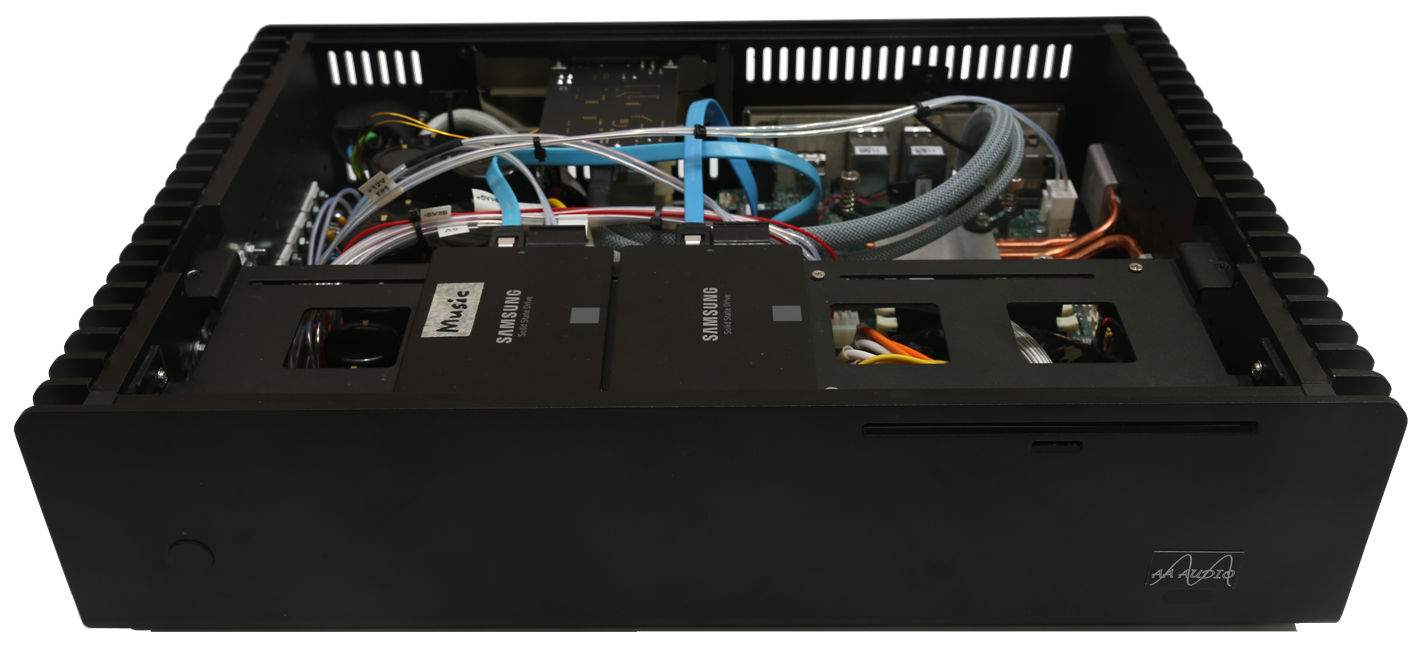
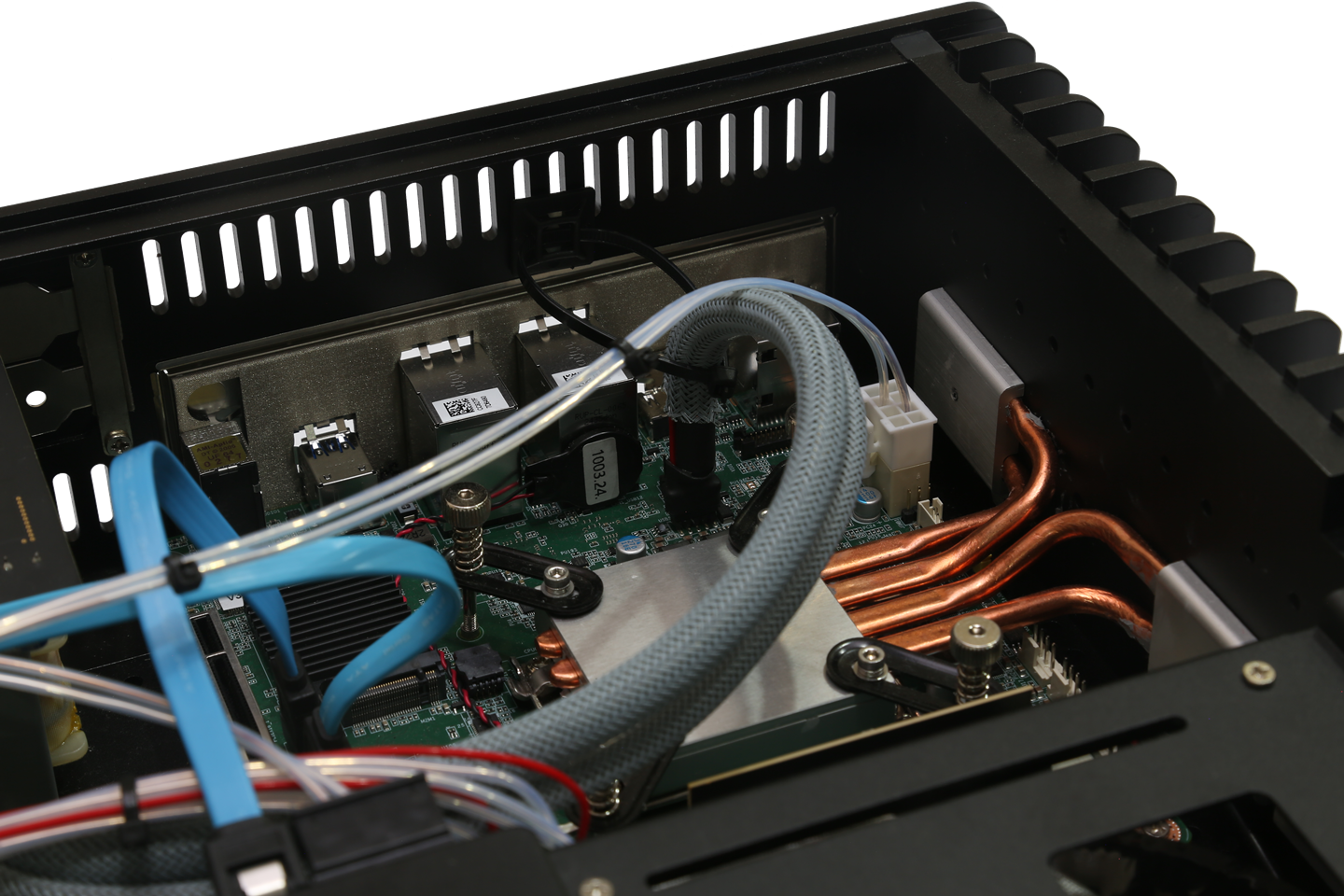
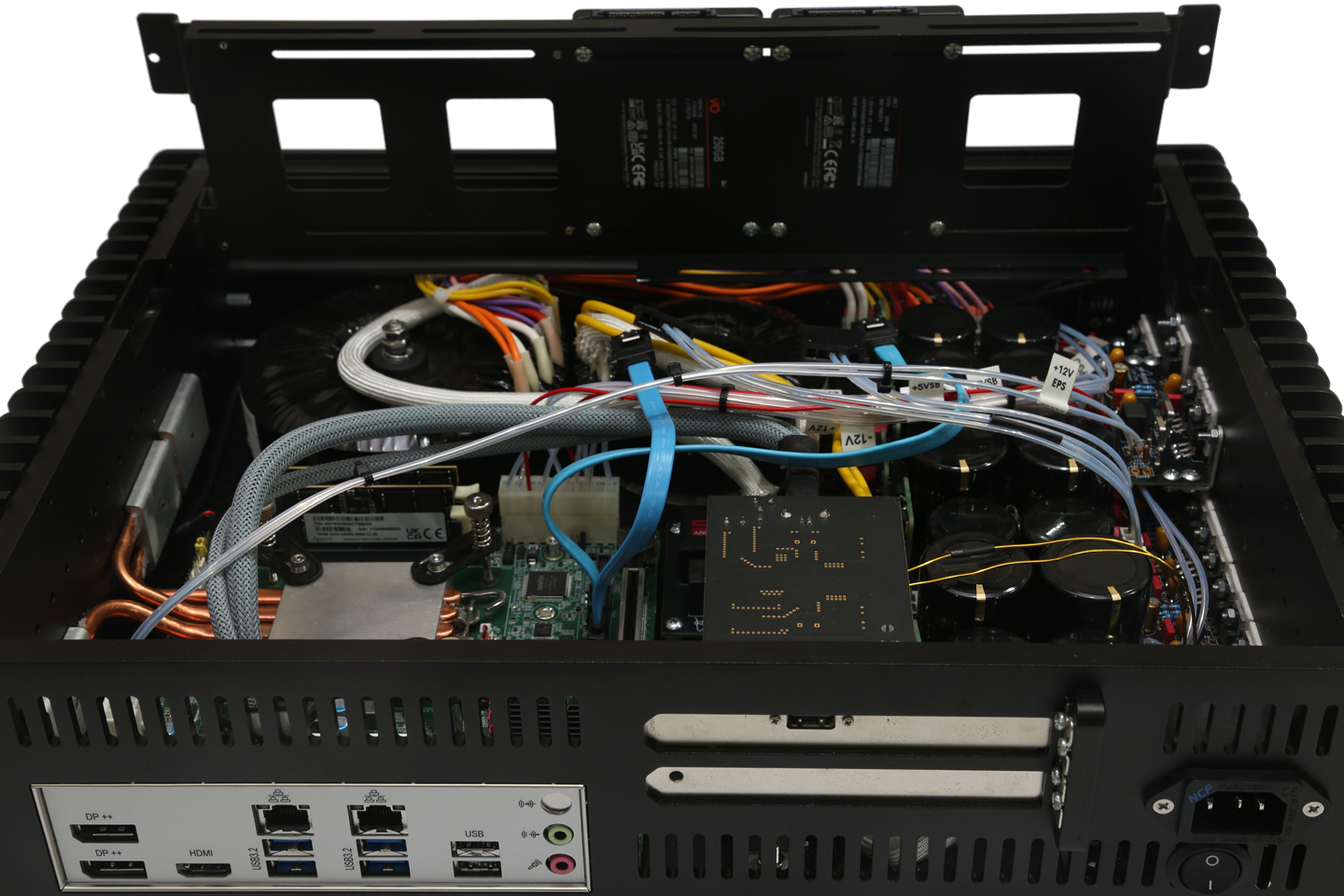
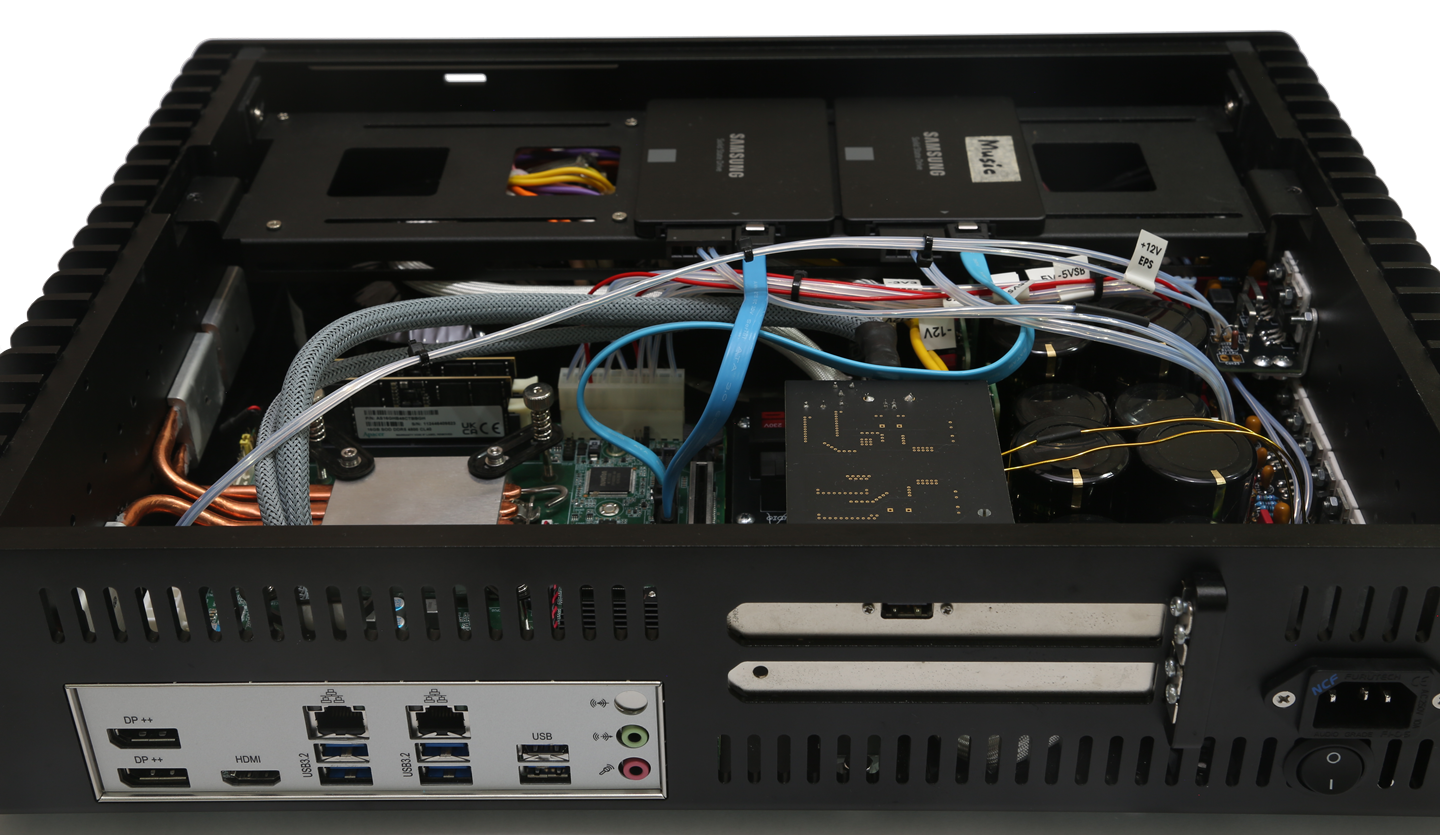
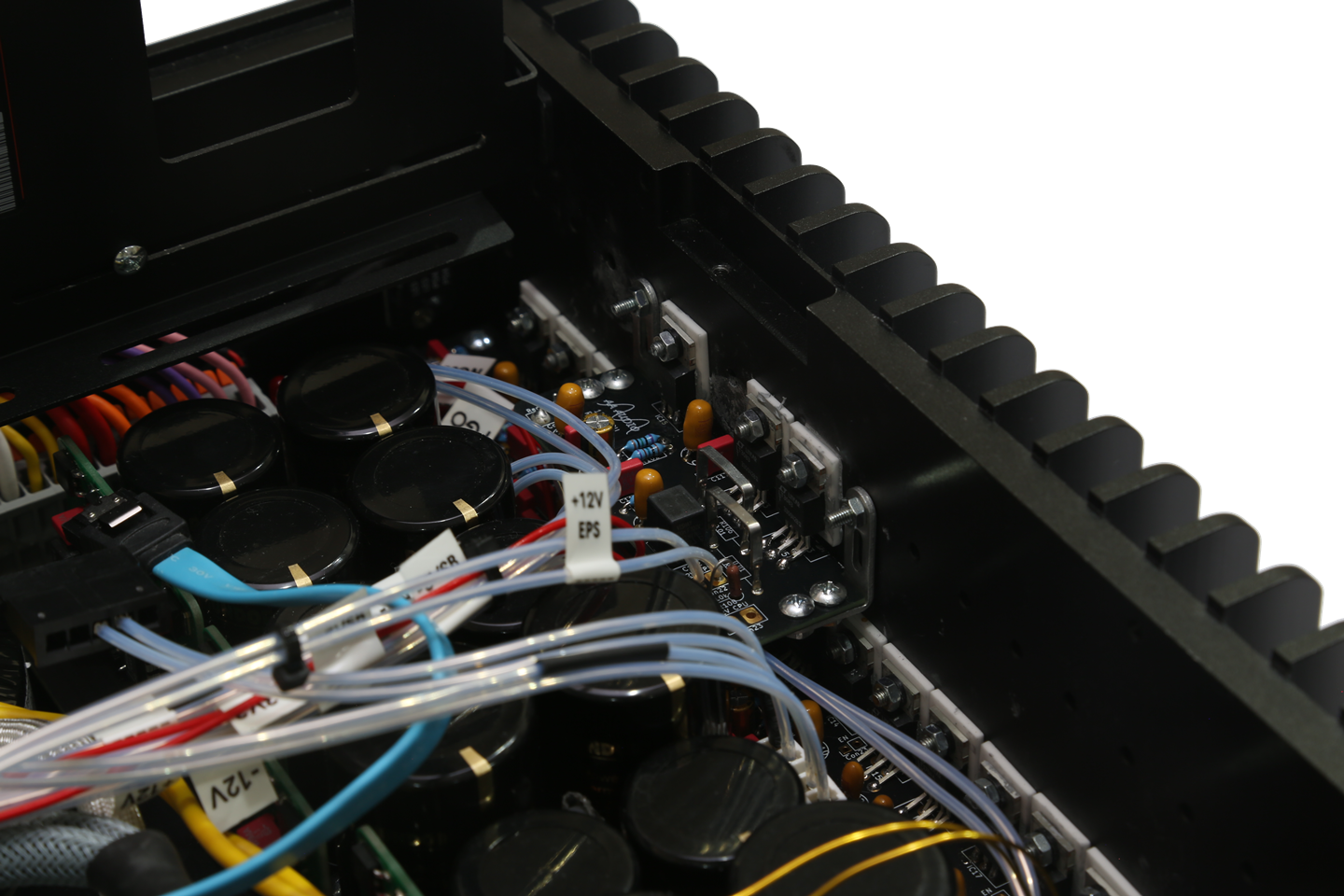
We completed the first build and tested AAMS XT with Intel Core i5-12400 just in time for NIAVS 2025 in April 2025. However, we tweaked and improved AARS in the past 3 months. Here are some of the pictures of the latest build with Mundorf Silver Gold wires for internal DC wiring. An industrial mini-ITX motherboard is used with passive cooling for the CPU. Please note the extra board for CPU voltage regulators stacked above the main power supply board.
Videos
Home Demo
If you are in Peninsular Malaysia and currently using Roon Nucleus, Intel NUC, or a regular PC / laptop as Roon Server, please contact us directly so that we can arrange home demo. Reviews are being arranged.
AARS Price
Please visit our online shop which allows custom configuration of AARS.
The warranty period of the AARS is 2 years.
1 or 2-box Solution?
Contrary to Roon’s recommendation of using separate Roon Server and endpoint, we prefer the sound of direct USB connection from AARS to DAC’s USB input through own internal USB Isolator. There is no need to have a separate endpoint.
Products Specifications
| AARS | |
|---|---|
| Motherboard & Processor | Advantech Industrial Motherboard, Intel Core i5-12400 |
| RAM | Apacer 2 x 16 GB DDR5-4800 |
| Casing | Streacom FC10 Alpha |
| CPU cooling | Heat pipes from CPU connected to Streacom FC10 case |
| LPSU rails | 7 |
| Transformer(s) | Custom Toroidy 300 VA for ATX, SSDs, USB DAC Toroidy 150 VA for 12V EPS |
| O/S | Windows 10 IoT Enterprise LTSC 21H2, Value |
| O/S SSD | Samsung EVO 870 250 GB |
| Music SSD | Not included in price, can select during order |
| USB2 Isolator | Optional |
| Connection to DAC | USB only |
| Music library management and streaming software | Roon |
| Net weight | 12.5 kg |
| Shipping weight | 15 kg |
| Power & fuse | 230V AC with 3.15A fast-acting thermal circuit breaker 115V AC with 6.3A fast-acting thermal circuit breaker |
| Average power consumption | < 0.4A for 230V AC |
| Operating temperature | If ambient room temperature is above 30 ° C, please use air conditioner for AARS longevity. If placed in the middle row of a hifi-rack, please consider putting a quiet blower fan on the left side of AARS. A small breeze of air helps cool down AARS left side heatsink which takes heat from all linear voltage regulators. |
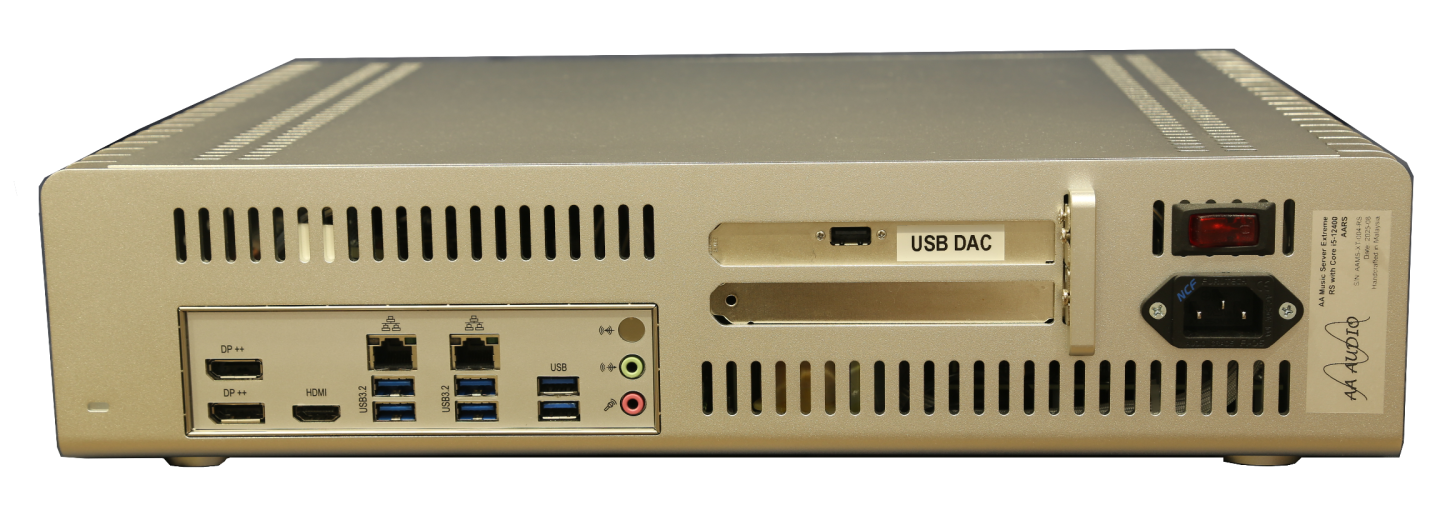
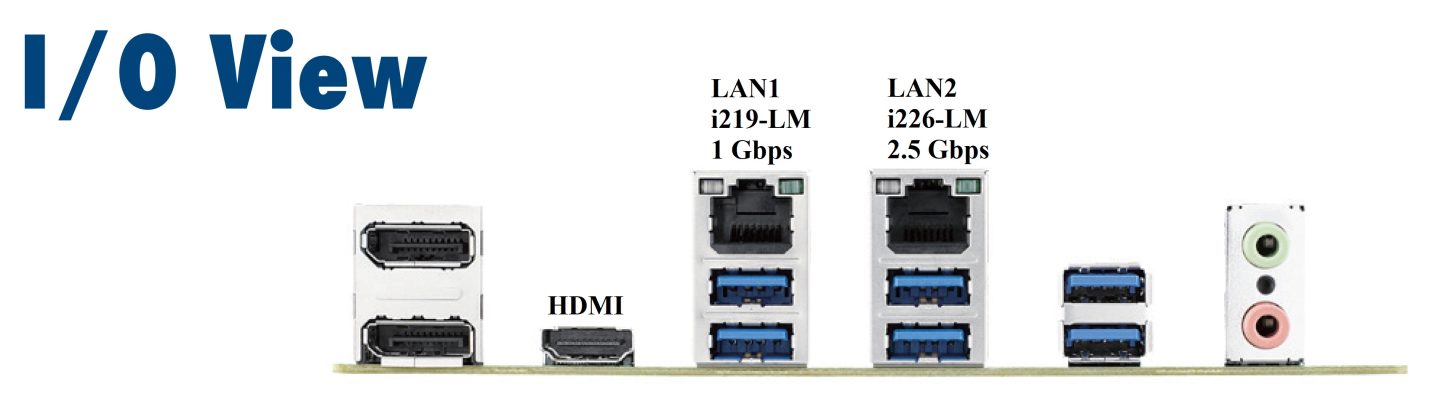
Notes on the motherboard back I/O (left side) and USB DAC connection:
- USB: Despite having six USB 3 ports, not all can be used at the same time due to 5V supply current limit of 5A. If you want to connect USB drive to copy music files into the internal SSD, please connect one USB drive at a time. We do not recommend using the motherboard’s USB port to connect USB drive permanently for music playback as it degrades the sound. Also, please do not use motherboard’s USB port to connect to USB DAC. There is an isolated USB2 port labeled USB DAC which is powered by low-noise 5V supply with the ground not connected to motherboard’s ground.
- LAN: There are two LAN ports. LAN1 port is 1 Gbps ethernet port based on Intel i-219-LM controller. LAN2 port is 2.5 Gbps ethernet port based on Intel i-226-LM controller with the latest firmware. We prefer using LAN1 port throttled down to 100 Mbps full duplex for best sound quality and also to minimize Roon’s aggressive data bandwidth request with unnecessary idle activities in between when streaming TIDAL or Qobuz which normally cause “TIDAL/Qobuz media is loading slowly” error messages.

FAQ
How long is the build time?
It depends on backlog situation and parts readiness. It take 2-3 weeks to build a unit plus a few days for thorough testing. Please contact us directly before placing order so that we can communicate directly when we can ship.
Why use SATA SSD instead of M.2 NVMe SSD?
We have tried both and prefer the sound of SATA3 2.5″ SSD. We can hear extra background noise when the O/S is cloned and installed into NVMe SSD plugged into the motherboard. We are aware there are audio-grade NVMe SSD with external power supply but the cost is higher than the Advantech industrial motherboard and Streacom FC10 case combined.
Why use Windows 10?
Over the past 4 years, we have tried many different music management and playback software running Windows and Linux. Please note that Windows 10 is designed for low-latency audio which Linux cannot match. Windows also has device driver supplied by the manufacturer of USB DAC while Linux uses generic ALSA interface.
Linux has many variants and derivatives where its maintenance and updates resources cannot match the resources available at Microsoft.
If customers insist on using Linux, we can build AARS for you without Windows, but that is not what we recommend.
Why use Industrial Motherboard?
Industrial motherboards are designed for use in rugged environment. They have better longevity and reliability.
We considered server motherboards but most of them are full-sized ATX motherboards. Options are very limited for mini-ITX server motherboard.
Why use 12th Generation Intel Processor?
There are known problems with Intel’s 13th and 14th generation processors.